The Money Pit Home Improvement Radio Show

Repair & Improve

Is Your Water Safe?

Silent contaminents can make you sick

by Tom Kraeutler

Your tap water smells like rotten eggs and tastes a little funny. Is it unhealthy? Probably not. You can’t really tell about water quality from its look, smell or even taste.

That rotten smell, for instance, can come from hydrogen sulfide, which is harmless. Algae also produce offensive odors and taste, yet it too is benign. Same for iron, rust or leaf residues, which can turn drinking water reddish brown, or excess manganese, which makes it, look black.

It’s the “silent” contaminants, the ones that don’t trigger your senses, that you need to worry about: lead from pipes in old houses; arsenic that naturally occurs in the earth; or microorganisms, pesticides and fertilizers that wash away from farms and lawns into storm drains and wind up in our drinking water supplies. All of these have been linked to serious illnesses.

Experts agree that the U.S. has one of the safest drinking waters supplies in the world, but that is no guarantee. Recent headlines about arsenic in the Midwest and New England water, and the chromium 6 chemical contaminations uncovered in California by the tenacious Erin Brockovich underline the need to be cautious.

Test First
If you can’t see, smell or taste a water problem, how do you detect these dangerous contaminants?  Well, if you’re like thousands of Americans, you might purchase a water purifier and assume everything is safe — a big mistake according to the Consumers Union (CU) and Environmental Protection Agency. (EPA).

You wouldn’t use eardrops to treat pink eye, or antacid for a headache. Likewise, you shouldn’t use a filter, distiller or other device to treat your water until you know if — and why — it needs to be treated. Highly popular charcoal filters don’t remove lead or microorganisms. (They do filter chlorine and pesticides.) Distillers, on the other hand, remove lead, but not volatile organic chemicals, like benzene. So it is important to have your water “diagnosed” before treating it.

First, get some information on your water. The EPA set standards for 80 contaminants and since 1999 has required all public water suppliers to send “consumer confidence reports” to their customers with results of testing for these standards. If you haven’t gotten a report, contact your water provider. (Remember, though, this covers the water's quality when it left the company, which may change by the time it runs out your faucet.) Well users should call your health department and ask about any past, existing or potential groundwater problems in your area.

Next comes testing. You should periodically test your water through an independent, certified lab. Labs offer a variety of testing packages (lead, minerals, volatile organic chemicals, radon, bacteria, pesticides) at a range of prices ($30-$250). There are also home test kits for various contaminants. To find a lab, check your local yellow pages, get suggestions from your health department, call EPA's Drinking Water Hotline (1-800-426-4791), or visit www.epa.gov/safewater/.

The Right Fix
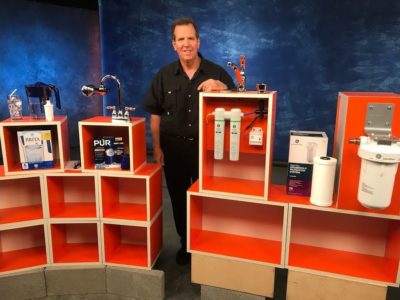
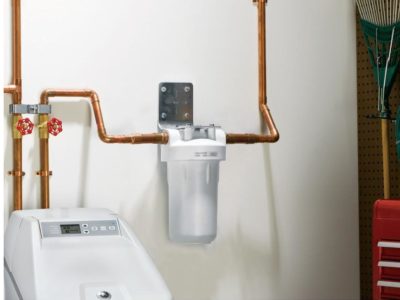
After you know what, if any, contamination exists, you can buy a water treatment unit that will take care of your problem. There are several different kinds of water treatment devices with about 400 manufacturers. Don't be swayed solely by a "registered by the EPA" label — it only means the water purifier was tested to make sure it doesn't cause contamination; it doesn’t mean it works well.

Water experts suggest buying from a reputable dealer and looking for a seal of approval by the independent evaluation organization, the National Sanitation Foundation (NSF) International. Also, remember that even the best water purifiers don't do their job if they are not maintained properly.

For additional info on water standards, testing and treatment, visit www.epa.gov/safewater/, www.nsf.org or call the EPA’s Safe Drinking Water hotline (1-800-426-4791.) The Water Quality Association (www.wqa.org) offers specific tips on troubleshooting drinking water problems in your home.

Is Bottled Better?
There’s mineral, sparkling, seltzer, artesian, distilled, club, purified.  Hundreds of brands of bottled water are swelling the billion-dollar industry. Are they worth the price?

It depends. If taste is your criteria, the Consumers Union, home of Consumers Reports, found that many bottled waters do taste good. Whether you like the earthy flavor of mineral water or the bubbling sensation of sparkling aqua, you’re likely to find a product you prefer over your tap water.

However, many a bottled water is tap water. In fact, when the US House Energy and Commerce Committee investigated the trendy bottled water market in the 1990s, it found a quarter of the products came from the same source as tap water. Although bottlers take steps to remove pollutants, contaminants from the water supply can crop up in the bottled waters.

Even artesian or other naturally occurring waters can contain higher than desired levels of contaminants, like arsenic, a poison that’s been in the news lately because of a push to reduce current water standards (50 parts per billion) to as low as 5 parts per billion. Linked to cancer and other life-threatening diseases, arsenic occurs naturally in the earth’s crust and can enter water supplies through normal rainfall, or runoff from factories, animal feed and refineries.

Studies by both CU and the non-profit Natural Resources Defense Council (NRDC) found several bottled waters with levels of arsenic well above than the proposed new standards, even though they were within current limits. Their studies also found higher than desired levels of chlorine by-products in some samples. In addition, the NRDC tested more than 100 brands and found about a third had contaminants levels above state guidelines.

In general, experts agree that most bottled waters are safe and taste fine, although CU also notes that using a carafe or faucet-mounted filter improves taste and can be much cheaper than buying bottles. If you’re not sure about your particular brand, the NRDC (www.nrdc.org) recommends contacting your state health department for information on specific bottled waters. The CU also rates bottled water at its site: www.consumersunion.org.

Bottle Basics
Confused by competing claims of water source and purity?  So were we.  Here's a list to help clear up the cloud:

  • SPRING WATER:  must flow naturally to the earth’s surface from an underground formation; source must be stated on label.
    Sparkling water:  spring water with natural bubbles or with carbon dioxide added.
  • PURIFIED WATER: water (often tap) that is processed to remove minerals and contaminants.
  • SELZER/SODA WATER: usually carbonated municipal water, sometimes filtrated.
  • MINERAL WATER: must contain at least 250 parts per billion of naturally occurring minerals.
  • ARTESIAN WATER: from tapping a confined aquifer, in which the water level is higher than the top of the aquifer

Print Version

Search Related Topics: Kitchen Remodeling, Plumbing, Safety...

Project of the Week E-Newsletter Sign Up Money Pit Podcasts Tom on AOL
© 1999-2008 Squeaky Door Productions, Inc. - All rights reserved. | Privacy Policy
Designed by: DVI | Developed by: Kurvits Media