
A rainwater collection system is a great way to reduce water and sprinkler system costs associated with watering your lawn or garden. When the summer yard-care season in full swing, household water use is up and conservation warnings aren’t far behind using a rainwater collection system is a smart idea.
Rainwater collection is actually a time-honored solution predating our modern municipal water treatment facilities. Compact and easy to assemble, contemporary rainwater collection systems are great resources for your non-potable water needs, and can help trim typically high water bills during the summer months.
Here’s all you need to catch free seasonal rainwater:
-
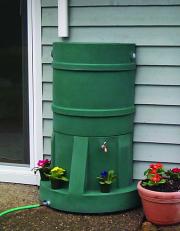 A rainwater collection area: In other words, your roof. Most roofing materials are safe for contact with water that will be used for outdoor watering chores involving non-potable water. However, if you’ve got a vegetable or herb garden in the mix, plan to water it from another source, as some roofing types like asphalt shingles can leach toxins that shouldn’t come in contact with edibles.
 - A means of transporting the rainwater to storage: Gutters, piping and downspouts will carry water to your collection barrel. Gutters that are kept clean and in good repair will help you get the most out of every rainfall and prevent the buildup of possible contaminants. And as with roofing, be aware of gutters’ construction; gutters with soldered seams are typically older and may leach lead, so gutters with riveted seams are preferred.
- A rainwater storage barrel: For best results, purchase a container made especially for rainwater collection. Usually made of toxin-free resin, concrete or fiberglass, proper rain barrels are designed with thick walls that withstand freezing and heat and are opaque to inhibit algae growth. No matter what kind of barrel you choose, follow instructions for safe placement and secure covering to prevent small children, pets and local wildlife from drowning.
- A system for distributing collected rainwater: Most storage tanks come equipped with a spigot, to which you can easily rig up a hose or garden soaker for watering.
Going green with this landscape care solution doesn’t have to cramp your style, either, thanks to clever rain barrel designs that complement or blend into your homescape. Among Home Depot’s offerings are rainwater collection systems masquerading as a terra cotta urn, fluted column and natural stone boulder.


Hi Tom,
I enjoy your radio (WIBX) show on Saturday mornings very much here in Utica New York. I have learned many DIY hints and tried them with much success. Thank you and appreciate your radio show.
In one of your recent shows you talked about a organization that sends you the chemicals you need for your specific lawn. In the show you gave a organization to contact. It was Get Sunny?????. I am interested to see exactly what they offer. Will you send me the organizations contact number or email please?
Thank you
Hi Ronald, thanks for the kind words. The company is called SUNDAY and their website is https://www.getsunday.com. If you use the promo code ‘moneypit’ you’ll get $20 off. I have been using the products myself and really enjoying the results.